
Module V
Location: Montreal, Canada
Year: 2024
Type: Competition
Award: Winner of “The Olympic Roof Reuse Competition” – Professional Product Development Award | 2025 AIA DC Unbuilt Award
Bring Olympic to Public. The Module-V project repurposes dismantled roof components from Montreal’s Olympic Park, offering a sustainable solution that revitalizes the community and stimulates the waterfront economy. Embracing the principles of circular economy and decentralization, this initiative transforms the remnants of the iconic Olympic Stadium Roof into functional, community-serving structures.
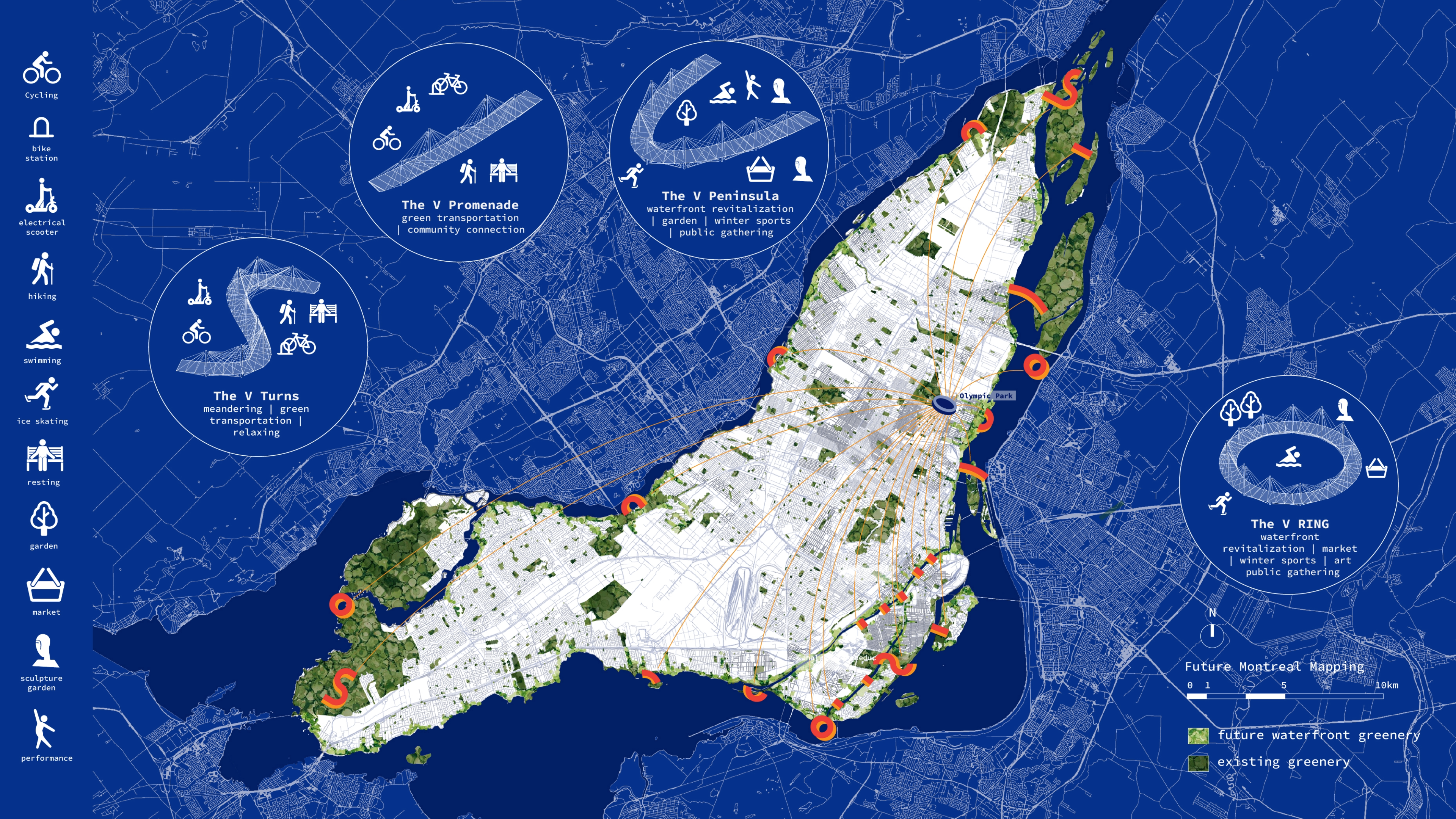
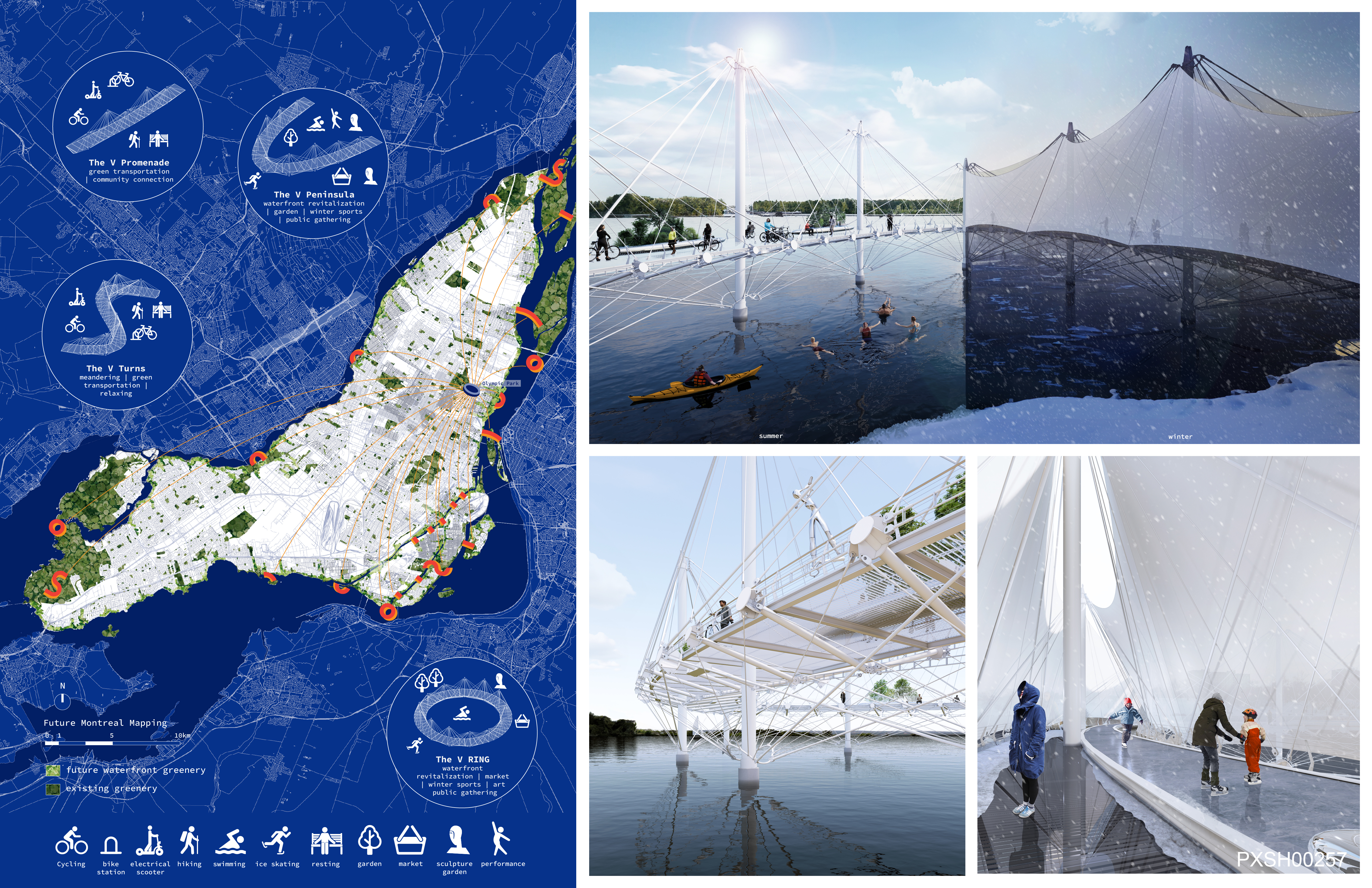
Hosting the Olympics is a prestigious honor for any city, but it often involves significant infrastructure costs. By 2006, the stadium’s costs were finally paid in full, 30 years after its inauguration. This project aimed to channel past investments back to the people and community to create new public amenities with minimum carbon emission. The Module-V system is designed to be versatile and seasonal, reflecting the multifaceted programs of the Olympic Stadium. The modular structure can form various configurations, such as the V-Promenade, V-Turns, V-Peninsula, and V-Rings. These configurations adapt to Montreal’s islandly urban fabric. The combinations can transform urban spaces in several ways: a seasonal pedestrian promenades, biking and walking friendly path, community engagement that encourages interaction and Micro forest that can contribute to urban biodiversity and provide natural oases. The decentralization concept disassembles a large-scale architectural structure into smaller, human-scale infrastructures distributed across the city, maximizing their social impact.
More
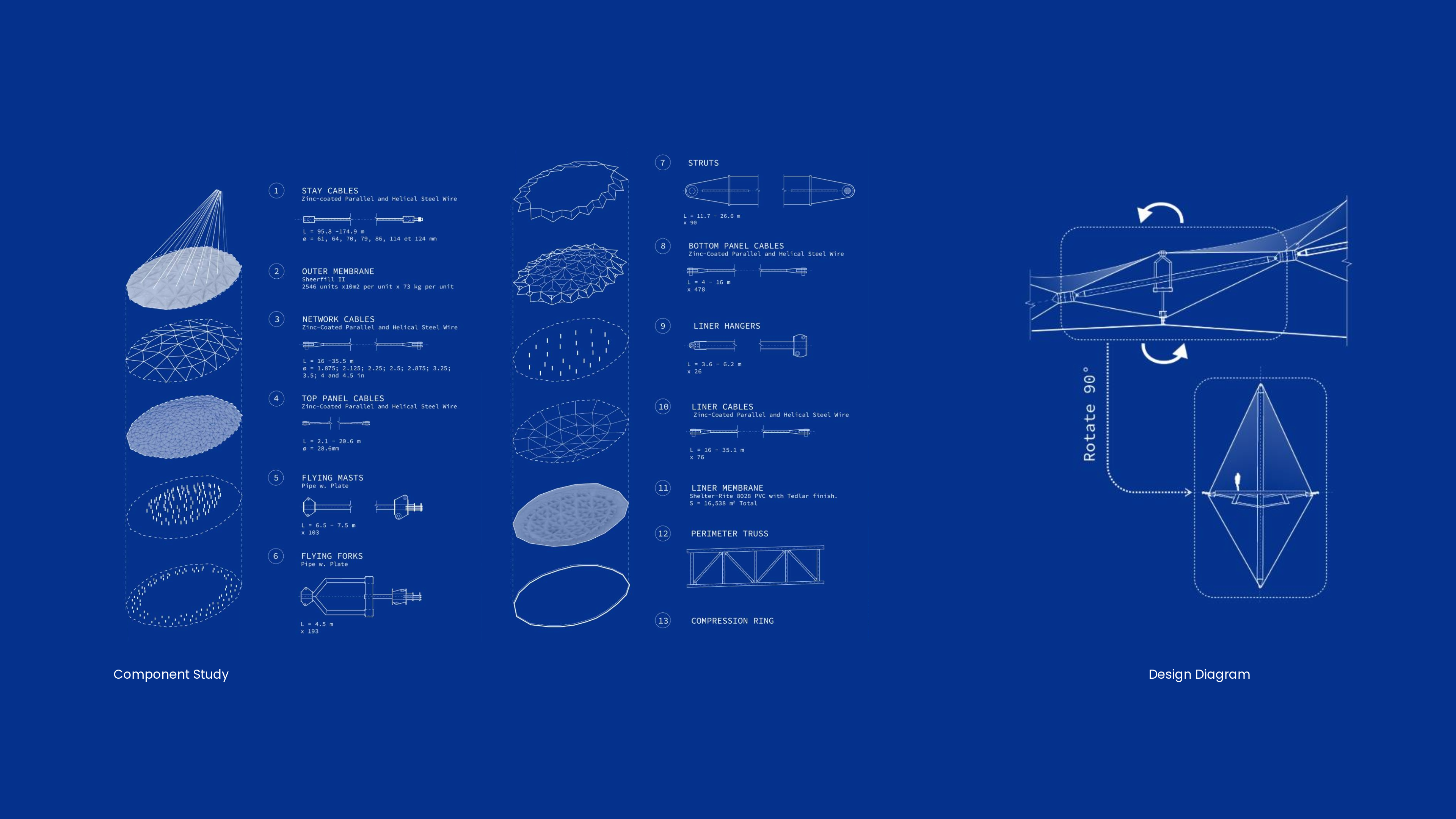
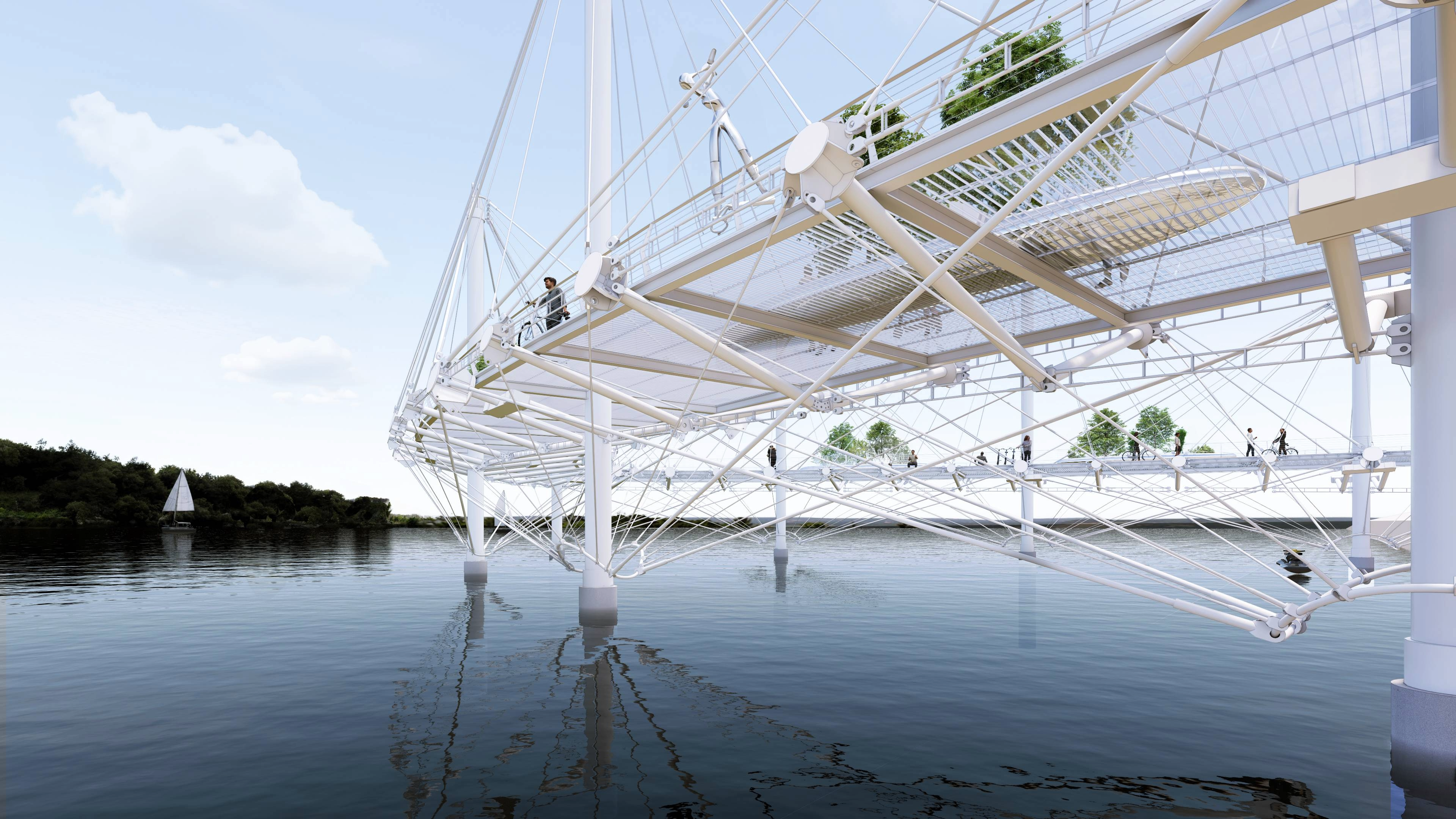
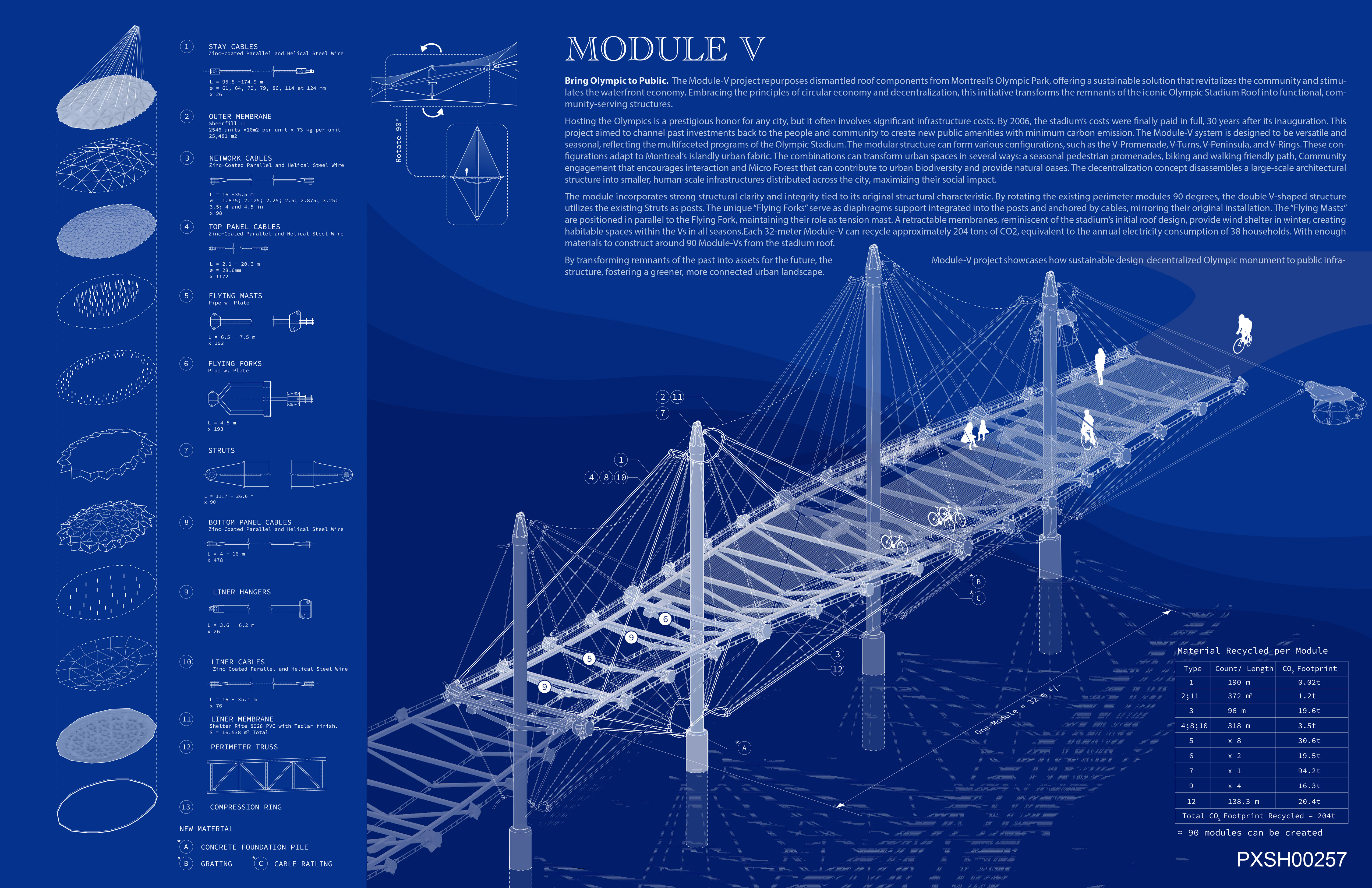
The module incorporates strong structural clarity and integrity tied to its original structural characteristic. By rotating the existing perimeter modules 90 degrees, the double V-shaped structure utilizes the existing Struts as posts. The unique “Flying Forks” serve as diaphragms support integrated into the posts and anchored by cables, mirroring their original installation.
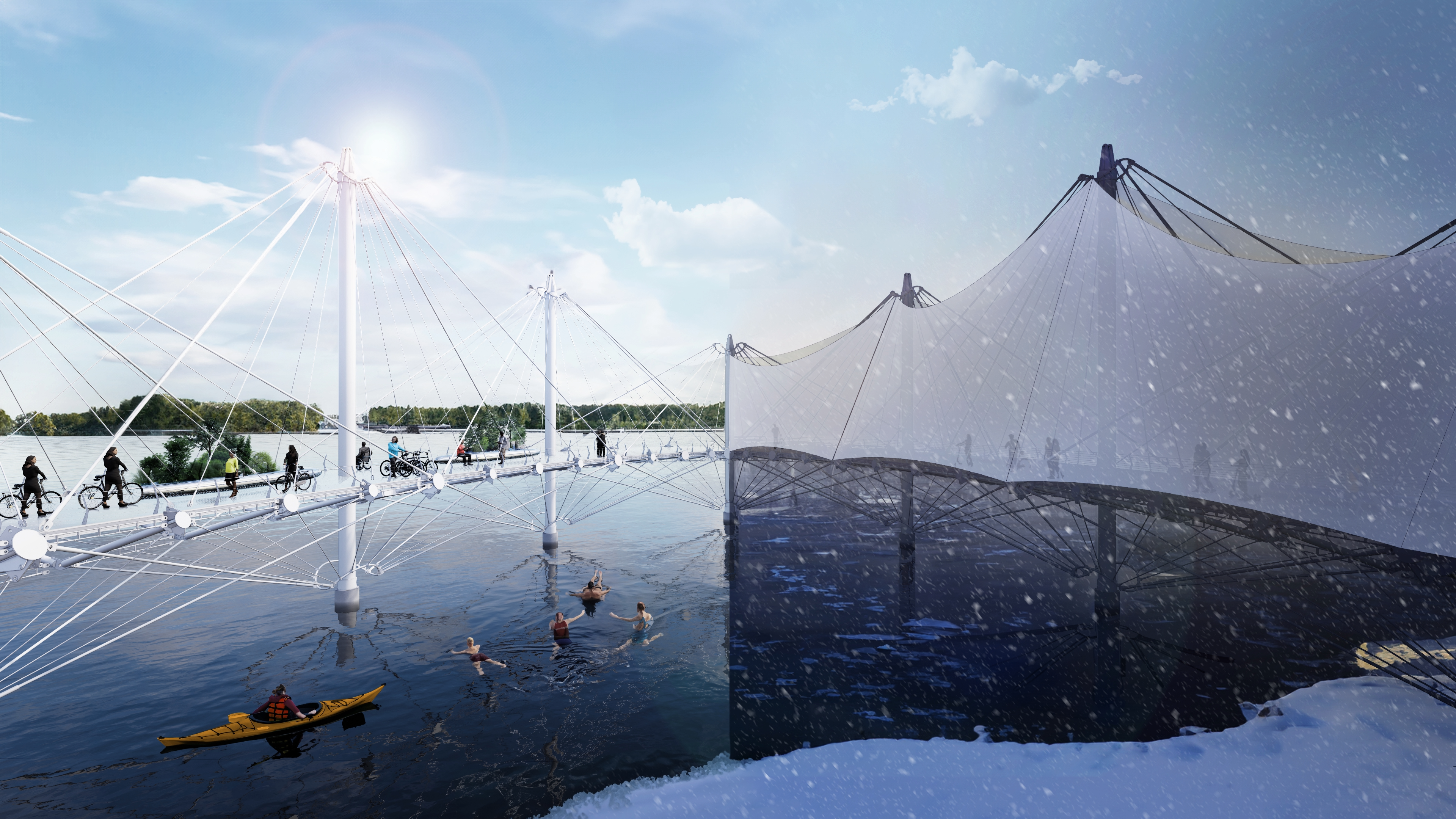
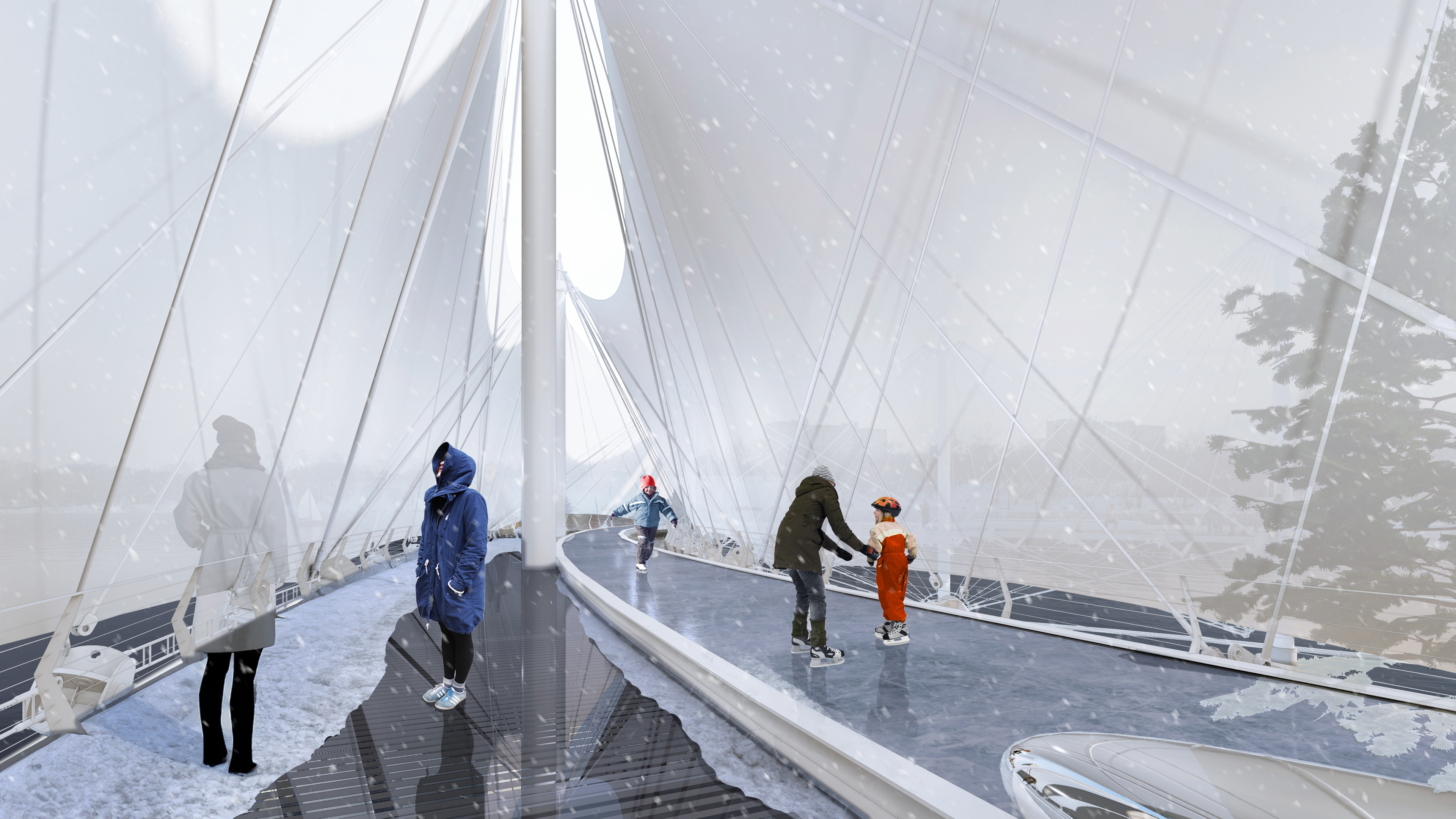
The “Flying Masts” are positioned in parallel to the Flying Fork, maintaining their role as tension mast. A retractable membranes, reminiscent of the stadium’s initial roof design, provide wind shelter in winter, creating habitable spaces within the Vs in all seasons.Each 32-meter Module-V can recycle approximately 204 tons of CO2, equivalent to the annual electricity consumption of 38 households. With enough materials to construct around 90 Module-Vs from the stadium roof.
By transforming remnants of the past into assets for the future, the Module-V project showcases how sustainable design decentralized Olympic monument to public infrastructure, fostering a greener, more connected urban landscape.

 NytaDesgin.com